
New World Screwworm (NWS) Resources
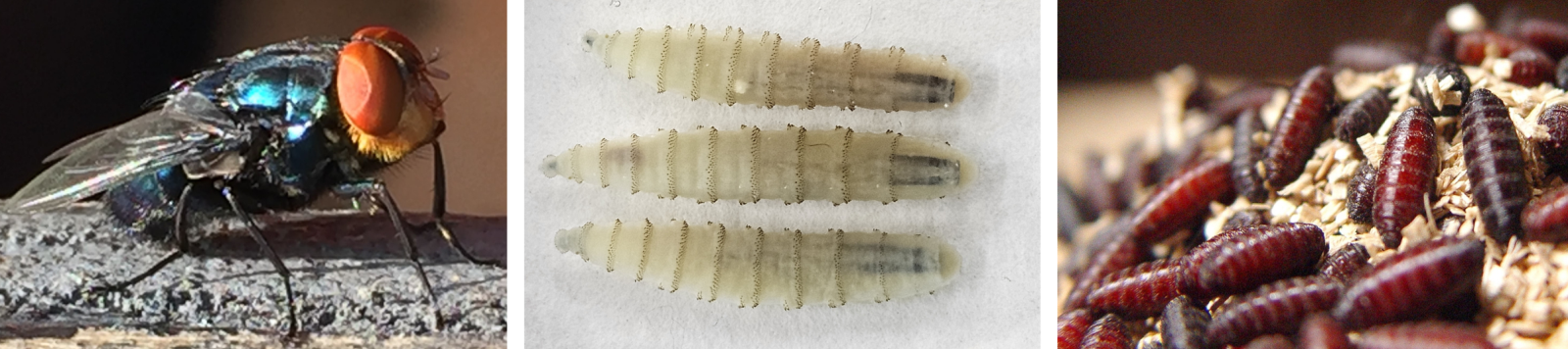
New World Screwworm (NWS) (Cochliomyia hominivorax) is a parasitic fly that affects livestock, pets, wildlife, birds, and, less commonly, people. Adult screwworm flies are about the size of a common housefly or slightly larger. They are attracted to wounds (tick bites, castration or dehorning, branding, shearing and sore mouth in sheep) and natural body openings, including the nose, eyes, ears, mouth, genital area, and newborn animals’ navels, where they lay eggs. The eggs hatch into larvae (maggots) that feed on living tissue. Infested animals may present with enlarging, draining, foul-smelling wounds and weight loss; they may isolate themselves and show signs of discomfort. Animals may die from secondary infection or toxicity in 7-14 days if not treated.
NWS is endemic in Cuba, the Dominican Republic, and parts of South America. The fly has moved northward through Central America and Mexico since 2023, increasing concerns about spread into new areas. In June 2026, the USDA’s Animal and Plant Health Inspection Service (APHIS) confirmed the first U.S. cases of the current outbreak in Texas and New Mexico.
The USDA and state animal health officials are responding with surveillance, quarantines, sterile fly releases, wildlife monitoring, and outreach efforts. The current risk to animals and people in the United States remains very low. Veterinarians, livestock owners, and pet owners in affected areas are encouraged to monitor animals for draining or enlarging wounds, signs of discomfort, and the presence of larvae or eggs.
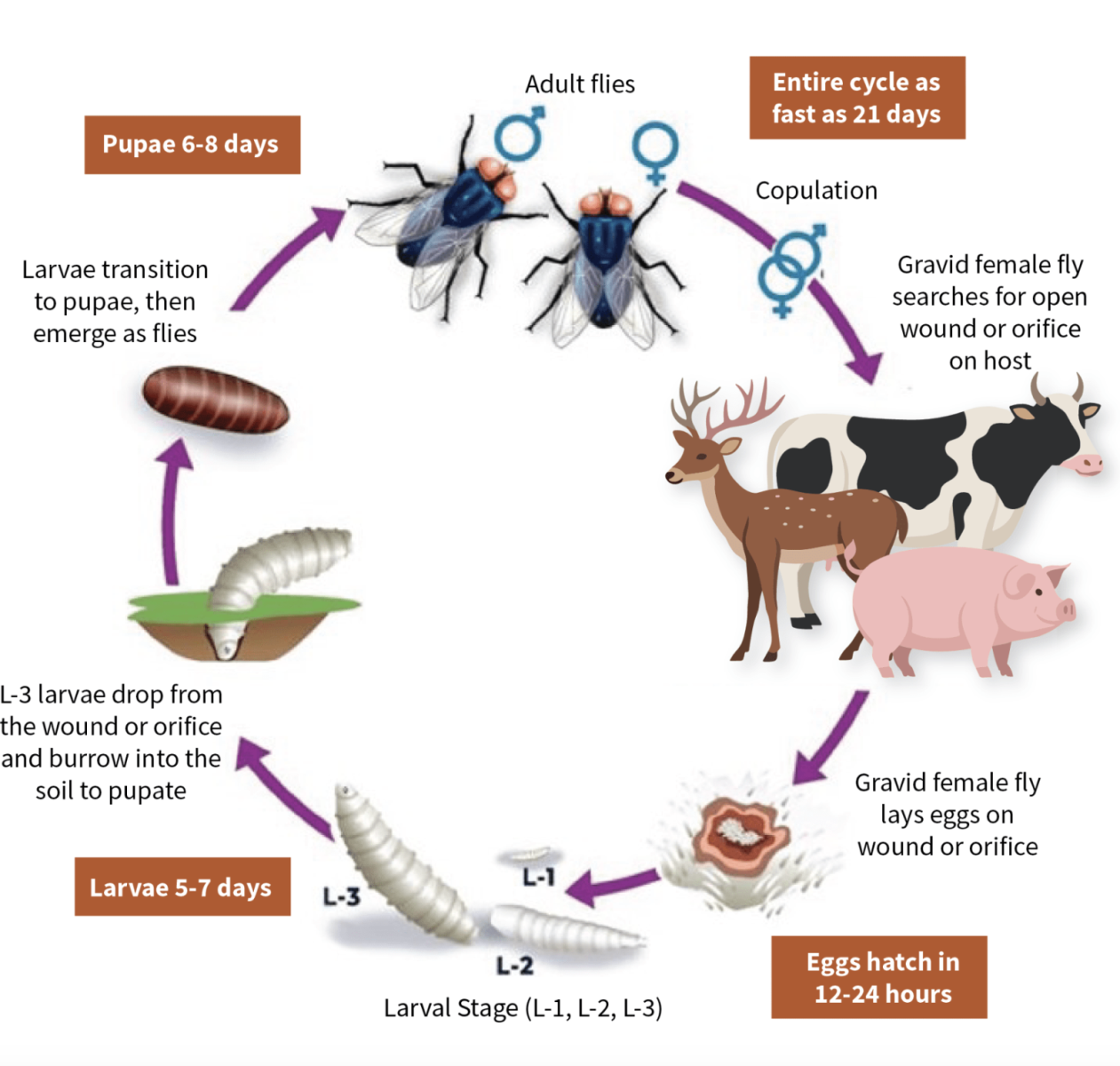
Resources
USDA Live Module: Confirmed Detections of New World Screwworm
FDA Information on Drugs for NWS Treatment and Prevention
APHIS Screwworm Identification Card
New World Screwworm Photo Gallery
NWS - Information for Veterinarians
Current status of NWS in Mexico & Central America
Standard Operating Procedure for Possible Detection of NWS in Animals
NVAP Training Modules for Accreditation Renewal
New World Screwworm Webinar for Animal Industry
Reporting
Veterinary professionals should remain vigilant for New World screwworm (NWS) and include it as a possible diagnosis when examining animals recently imported into the country that have unusual wounds, developing lesions, or signs of progressive infection. As a federally reportable disease, any suspected or confirmed cases must be reported immediately by accredited veterinarians and diagnostic laboratories to the APHIS Area Veterinarian in Charge and the Massachusetts State Veterinarian, Dr. Lorraine O’Connor, at L.OConnor@mass.gov 617-626-1791.
Animal Travel
USDA APHIS is working to provide veterinarians with timely updates and guidance regarding animal movement and travel requirements, recognizing the increased number of questions surrounding this issue. Any New World screwworm (NWS)-related travel requirements or restrictions communicated to USDA APHIS by international partners are being compiled and posted on the USDA APHIS webpages below. These resources will be updated as additional information becomes available.
- APHIS International Regulations (IRegs) for non-pet species
- APHIS International Pet Travel website for pet species
- APHIS Dog Import Website
MDAR has issued new animal movement restrictions related to New World Screwworm (NWS). The order establishes additional requirements for dogs, cats, and other susceptible animals entering Massachusetts from areas impacted by NWS, including veterinary inspection and certification requirements. See Animal Health Order HERE